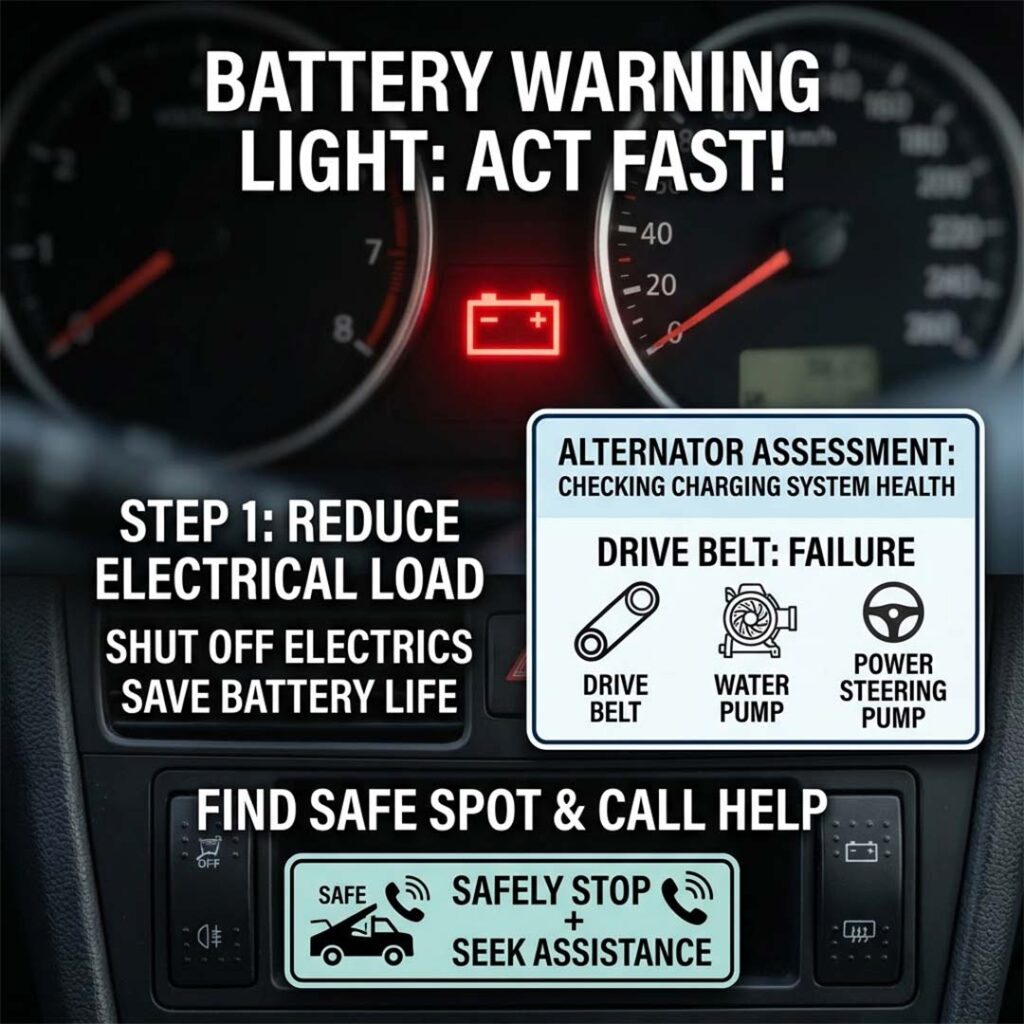
Battery Warning Light on the Dashboard: What Does It Mean and What Should You Do?
Have you ever seen a battery warning light appear on your car’s dashboard while driving?
The battery warning light usually indicates a problem with the vehicle’s charging system, rather than simply a weak or dead battery.
The battery-shaped warning symbol is one of the most important warning lights that should not be ignored. Many drivers assume that this warning means the battery is simply low or needs to be replaced. However, this is not necessarily the case.
In most situations, the battery warning light indicates a problem with the vehicle’s charging system, particularly the alternator or another component responsible for charging the battery while the engine is running.
Understanding what this warning light means and knowing what to do when it appears can help prevent your vehicle from losing electrical power and stopping unexpectedly.
What Does the Battery Warning Light Mean?
Normally, the battery warning light illuminates when you first turn the ignition on before starting the engine. This is a normal part of the vehicle’s warning-light check.
Once the engine starts and the charging system is operating normally, the battery warning light should turn off.
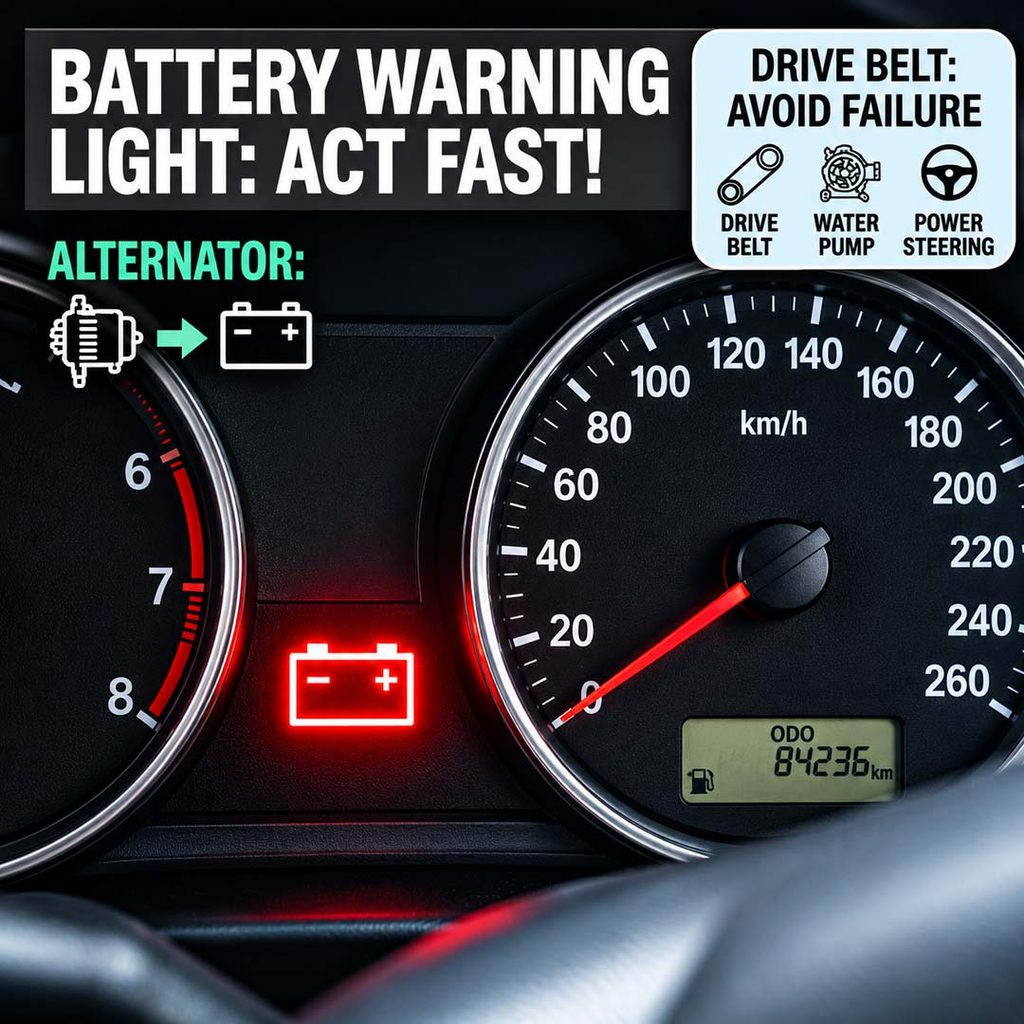
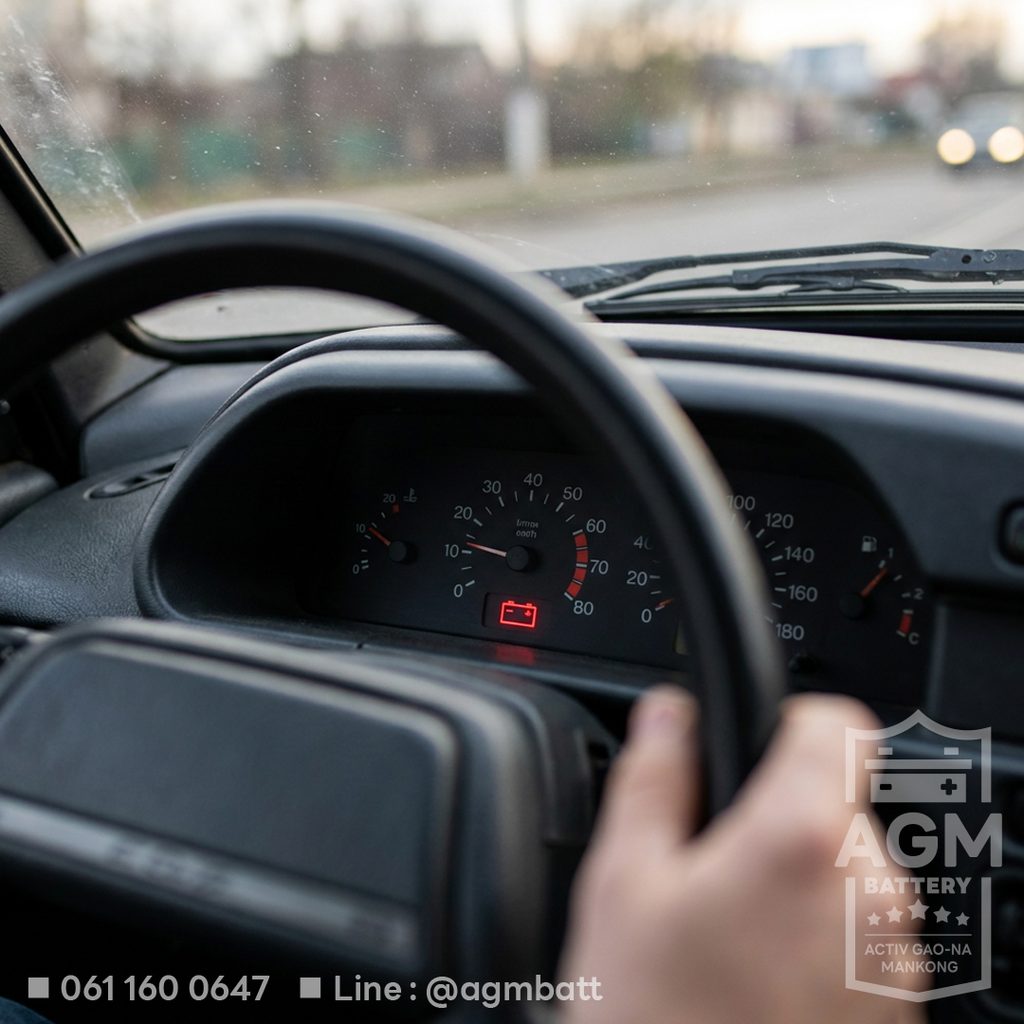
However, if the battery warning light remains illuminated after the engine starts or suddenly comes on while driving, this may indicate a problem with the vehicle’s charging system.
It is important to understand that the battery warning light does not simply mean that the battery is empty or fully charged.
Instead, it generally indicates that the vehicle may not be receiving sufficient electrical power from the alternator or charging system.
If the alternator is no longer charging the battery, the vehicle’s electrical systems may have to rely primarily on the electricity stored in the battery. Once the battery’s available power is depleted, the engine may eventually stop running.
For this reason, a battery warning light that appears while driving should be treated as a serious warning.
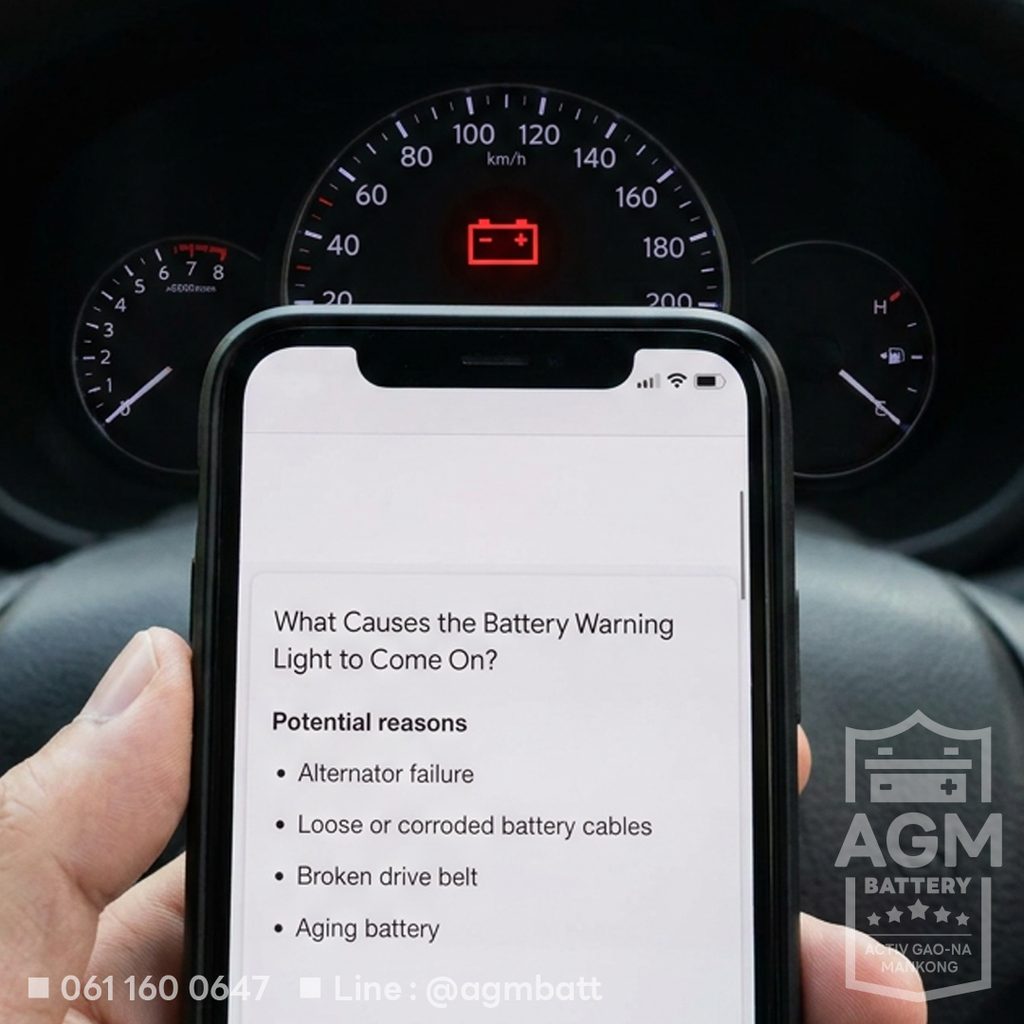
What Causes the Battery Warning Light to Come On?
- Alternator failure
- Damaged or broken drive belt
- Faulty voltage regulator
- Loose or damaged battery connections
- Wiring or charging-system problems
- Battery or electrical system problems
What Should You Do When the Battery Warning Light Comes On?
If the battery warning light appears while you are driving, there are two common possibilities that should be considered first:
- The alternator or charging system has failed.
- The alternator drive belt is broken or damaged.
The first priority is to find a safe place to stop the vehicle and inspect the situation if it is safe to do so.
1. Alternator or Charging System Failure
The alternator is responsible for generating electrical power while the engine is running and charging the vehicle’s battery.
If the alternator fails, the battery may no longer receive sufficient charging power.
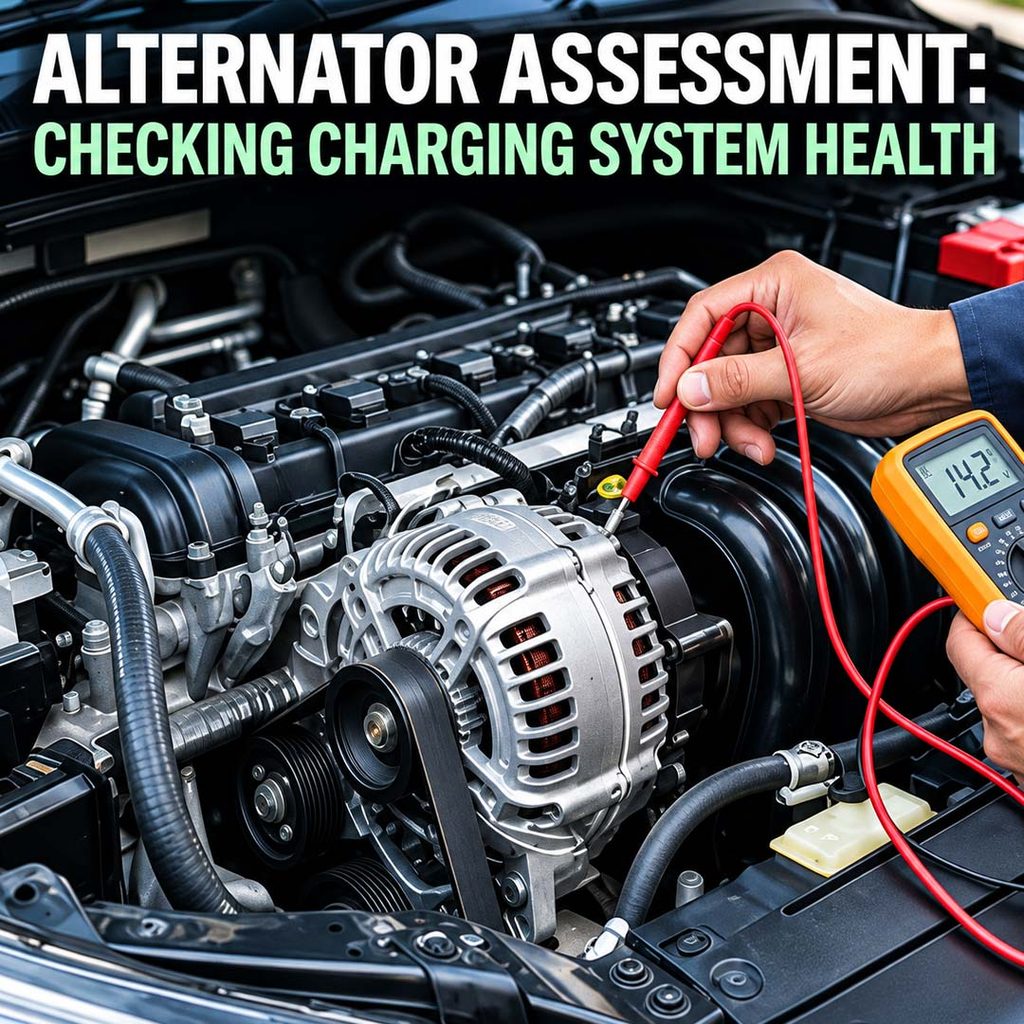
The vehicle may continue to operate for a short period because the battery still contains stored electrical energy. However, the available driving time depends on several factors, including the battery’s capacity and condition, the vehicle’s electrical load, and the type of engine and electrical system.
If the alternator has failed, it is important to reduce unnecessary electrical consumption and get the vehicle to a safe location or an appropriate repair facility as soon as possible.
Turn off unnecessary electrical equipment such as:
- Air conditioning
- Audio system
- Heated seats
- Rear window defogger
- Unnecessary interior lighting
- Other non-essential electrical accessories
However, safety-related equipment such as headlights and hazard warning lights should always be used when necessary.
2. Broken Alternator Drive Belt
A broken or damaged alternator belt can also cause the battery warning light to illuminate.
If the alternator is driven by an engine belt and that belt breaks, the alternator may stop generating electrical power.
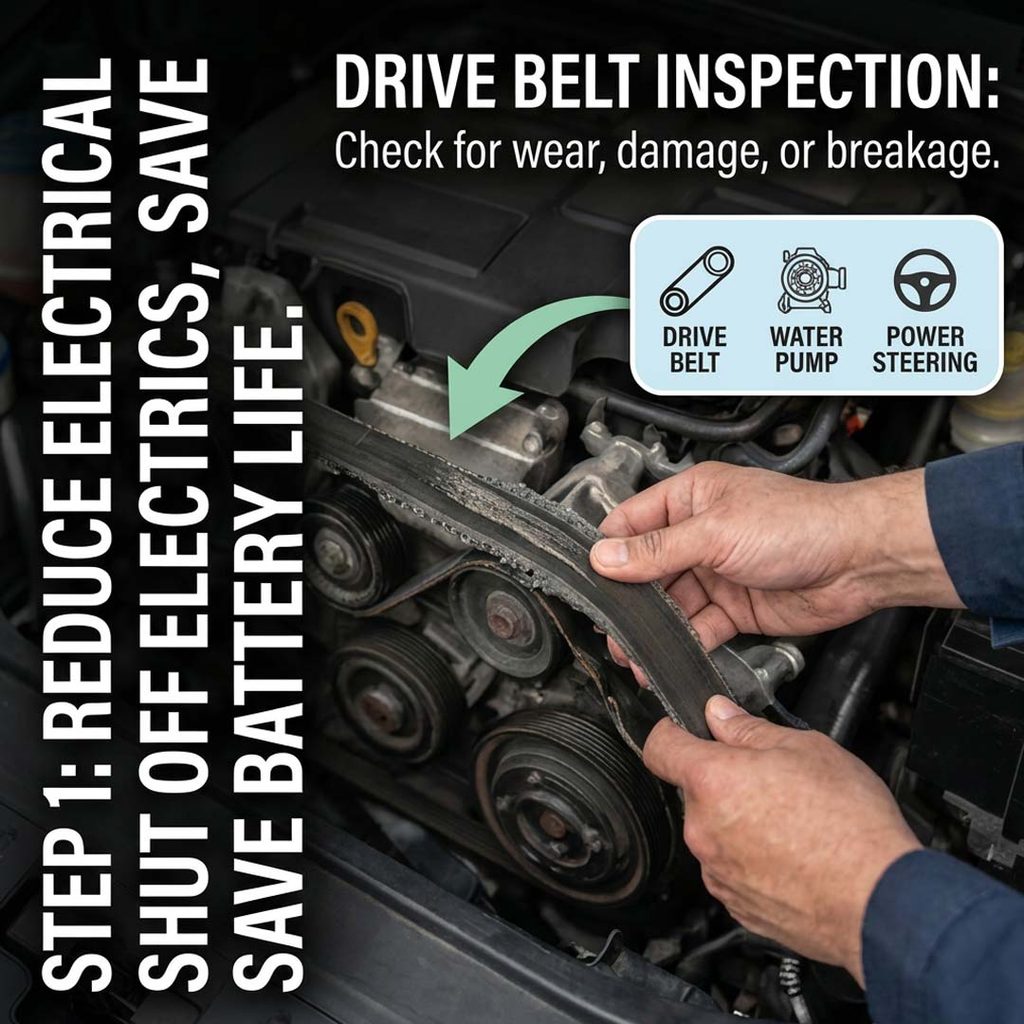
If you are able to stop safely, visually inspect the belt. Never place your hands near moving engine components.
If the belt is broken, do not continue driving unnecessarily. Depending on the vehicle design, a broken belt may also affect other engine components.
In this situation, contacting roadside assistance or a qualified technician is the safest option.
How Can You Tell if the Alternator Is Failing?
In addition to the battery warning light, several other symptoms may indicate an alternator or charging-system problem.
1. Changes in Engine Idle or Engine Operation
Electrical-system problems can sometimes be accompanied by changes in the way the engine operates, particularly when system voltage becomes unstable.
2. Headlights Become Dimmer
One of the most noticeable signs of a charging-system problem is reduced headlight brightness.
If the alternator is not producing enough electrical power, the vehicle may begin relying on the battery, causing the voltage to gradually decrease.
3. Air Conditioning Becomes Less Effective
If the vehicle’s electrical system is experiencing insufficient voltage, some electrical components may not operate normally.
You may notice changes in the performance of the air-conditioning system or other electrical equipment.
4. The Engine Eventually Stalls
If the alternator completely fails, the vehicle will continue consuming electrical energy from the battery.
Once the battery voltage becomes too low, essential electrical systems may no longer function correctly and the engine may eventually stop.
At that point, the vehicle may no longer be able to continue driving or restart.
What Should You Do if the Alternator Warning Appears?
If the battery warning light appears on the dashboard, do not ignore it.
The safest approach is to:
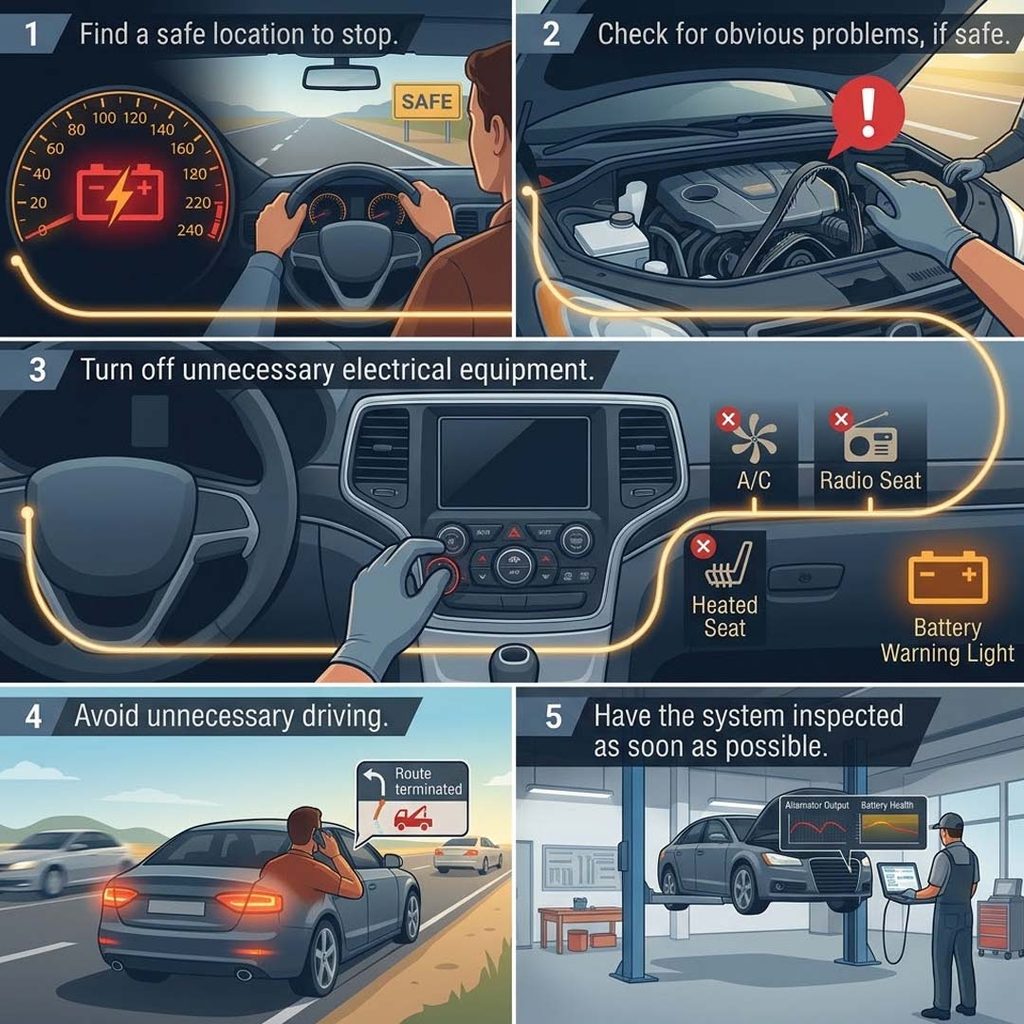
- Find a safe location to stop.
- Check for obvious problems, such as a broken drive belt, if it is safe to do so.
- Turn off unnecessary electrical equipment.
- Avoid unnecessary driving.
- Have the battery and charging system inspected as soon as possible.
If the charging-system failure appears serious, the vehicle could lose electrical power and stop unexpectedly.
For this reason, drivers should take extra care when deciding whether to continue driving.
Electrical System Problems Can Also Cause the Battery Warning Light
The battery warning light may also be related to other problems within the vehicle’s electrical system.
A vehicle’s electrical system consists of multiple components that work together, including:
- Battery
- Alternator
- Fuses
- Wiring
- Electrical connections
- Voltage regulation components
- Electronic control systems
If one of these components becomes damaged or fails, the charging system may not operate correctly.
For example, a blown fuse, damaged wiring, poor electrical connection, or low battery voltage can contribute to electrical-system problems.
If the battery is not being properly recharged, the vehicle may eventually display a battery warning light on the dashboard.
Therefore, it is important to diagnose the entire charging and electrical system, rather than assuming that the battery itself is necessarily defective.
Does the Battery Warning Light Mean the Battery Needs to Be Replaced?
Not necessarily.
This is an important point for vehicle owners.
A battery warning light is primarily an indication that something may be wrong with the vehicle’s charging system or electrical system.
Replacing the battery without checking the alternator and charging system may not solve the problem.
A proper inspection should determine whether the problem is caused by:
- The battery
- Alternator
- Voltage regulator
- Drive belt
- Wiring
- Fuse
- Electrical connection
- Another charging-system component
Only after the actual cause has been identified should the appropriate component be repaired or replaced.
How Can You Prevent Charging-System Problems?
Regular maintenance can help reduce the risk of unexpected electrical-system problems.
Before a long journey, it is a good idea to check the condition of the:
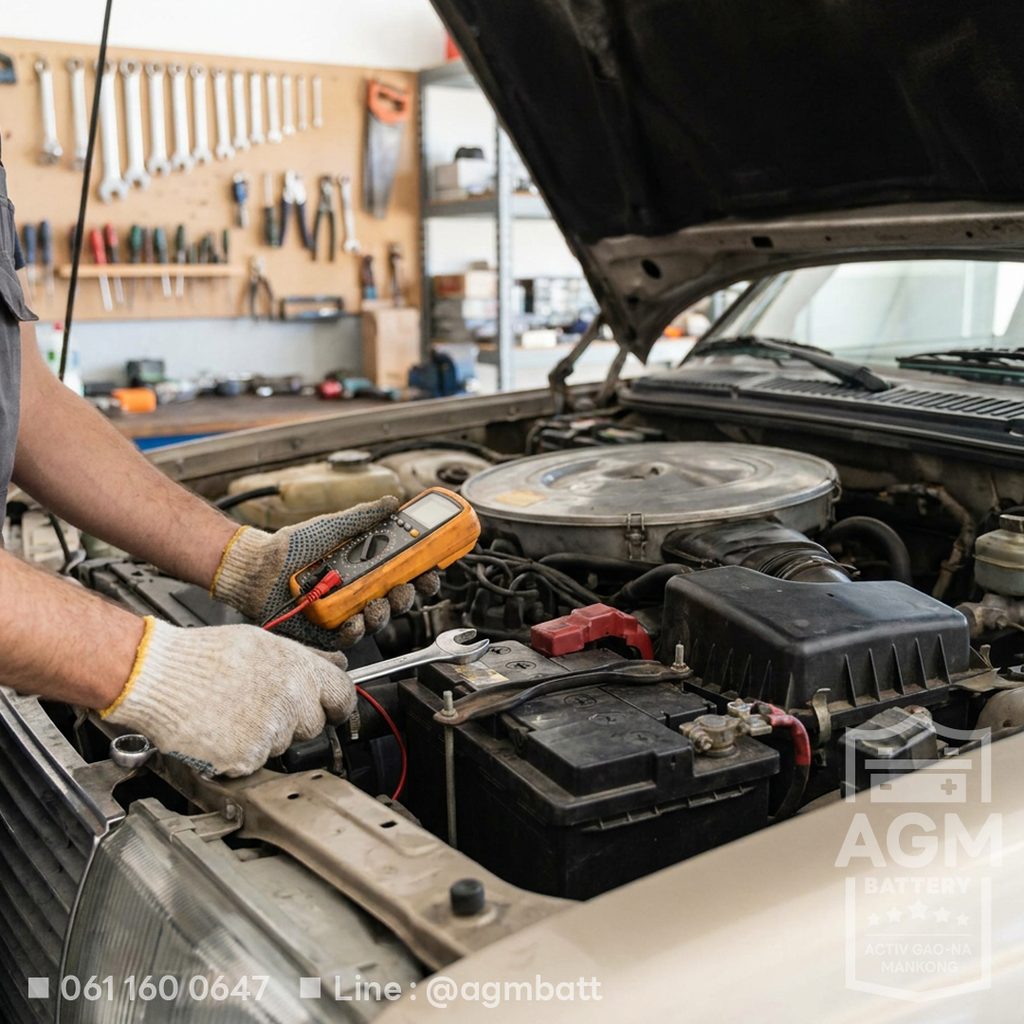
- Battery
- Battery terminals
- Alternator
- Alternator drive belt
- Electrical connections
- Charging system
You should also follow the vehicle manufacturer’s recommended maintenance schedule and have the vehicle inspected periodically by a qualified technician.
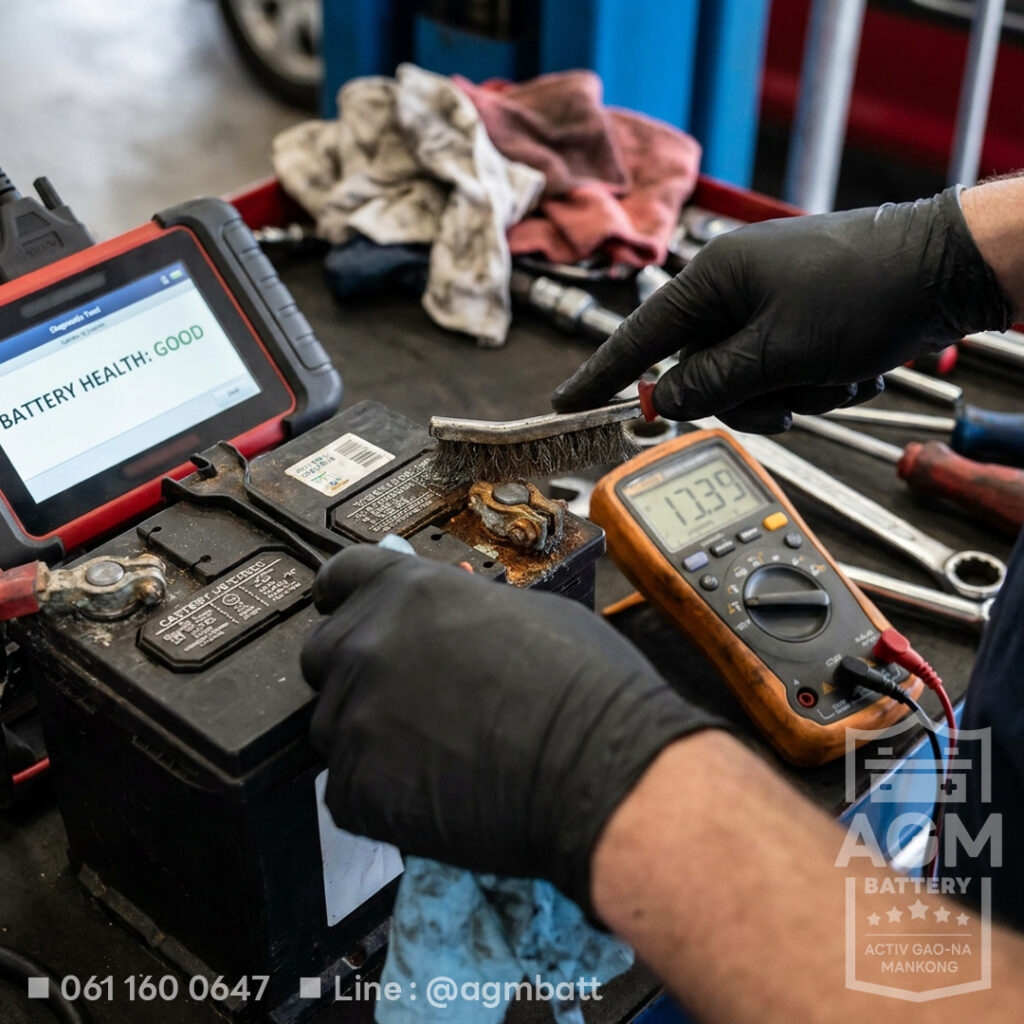
For modern vehicles, particularly European cars equipped with advanced electrical systems and Battery Management Systems (BMS), proper diagnostic equipment may be required to accurately identify charging-system faults.
Important Safety Advice
If the battery warning light appears while driving, do not assume that the vehicle can continue operating normally.
A vehicle with a charging-system failure may eventually lose electrical power and stop.
If possible, move the vehicle to a safe location and seek professional assistance.
Do not attempt to inspect a moving engine or drive belt while the engine is running. Always prioritize personal safety.
Conclusion
The battery warning light on the dashboard is an important warning that should never be ignored.
Although the symbol looks like a battery, it does not necessarily mean that the battery itself is defective or completely discharged. In many cases, it indicates a problem with the alternator, charging system, drive belt, wiring, or another electrical component.
If the warning light appears while driving, find a safe place to stop, reduce unnecessary electrical consumption, and have the vehicle inspected as soon as possible.
Early diagnosis of a charging-system problem can help prevent the vehicle from losing electrical power and stopping unexpectedly on the road.
Regular inspection of the battery, alternator, drive belt, and electrical system is one of the best ways to keep your vehicle reliable and ready for the road.
Frequently Asked Questions
What does the battery warning light on the dashboard mean?
The battery warning light generally indicates a problem with the vehicle’s charging system. It does not necessarily mean that the battery itself needs to be replaced.
Can I continue driving when the battery warning light is on?
You should avoid unnecessary driving. If the alternator is not charging the battery, the vehicle may eventually lose electrical power and the engine may stop.
Does a battery warning light mean the battery is dead?
Not necessarily. The warning may be caused by an alternator, drive belt, wiring problem, fuse, or another charging-system fault.
What should I check first?
If it is safe to do so, check for obvious problems such as a broken alternator drive belt. The battery and charging system should then be inspected by a qualified technician.
Can replacing the battery fix the warning light?
Only if the battery itself is the cause of the problem. If the alternator or charging system has failed, replacing the battery alone will not fix the underlying problem.
Why do the headlights become dim when the battery warning light appears?
If the alternator is not producing enough electrical power, the vehicle may rely on the battery’s stored energy. As battery voltage decreases, the headlights and other electrical equipment may become less effective.
What happens if I continue driving with a charging-system problem?
The battery will continue to discharge. Eventually, the vehicle may lose sufficient electrical power to operate essential systems, causing the engine to stall and the vehicle to stop.
Should I turn off the air conditioning?
If the charging system has failed and you need to move the vehicle to a safe location, reducing unnecessary electrical loads may help conserve the remaining battery power. However, safety should always come first.