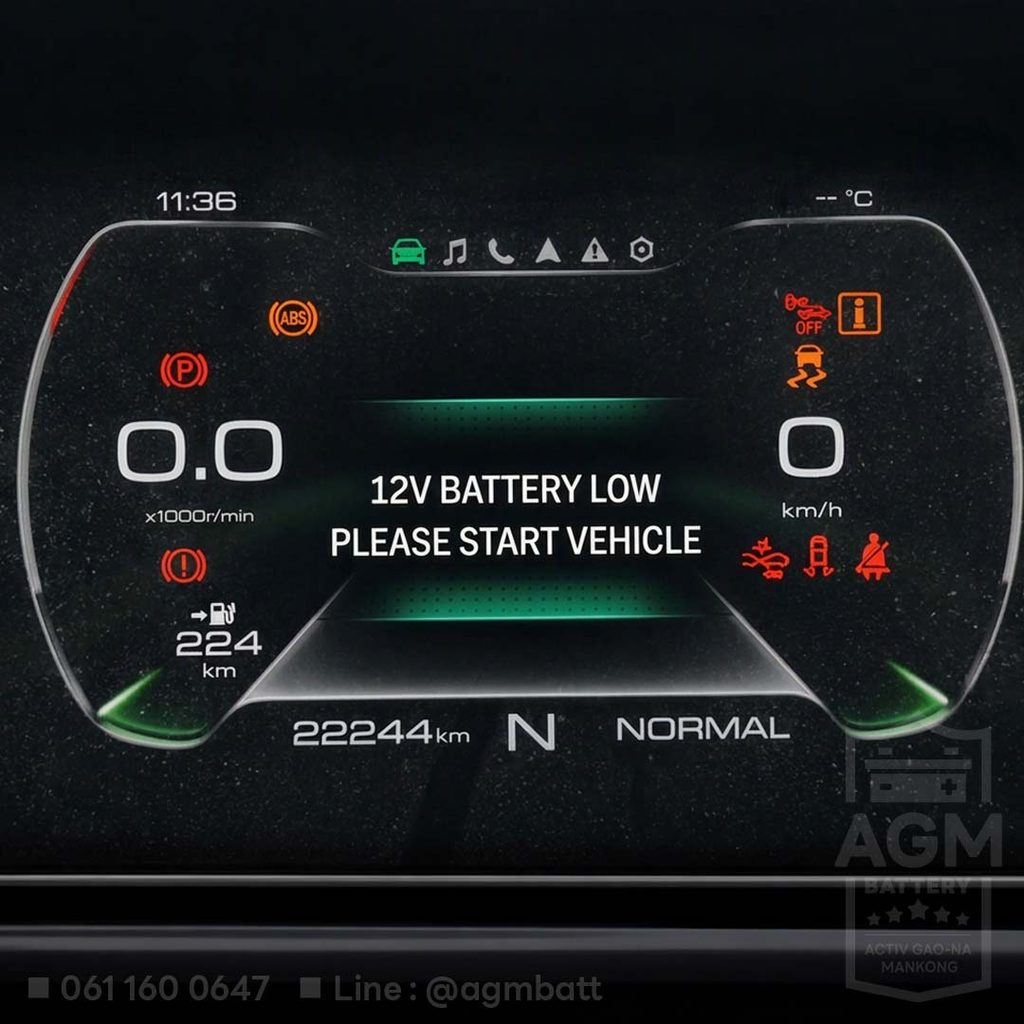
Short answer: some electric vehicles warn the driver when the 12-volt battery is weak, but others may show little or no warning before the car becomes unresponsive. A full high-voltage traction battery does not guarantee that the vehicle can unlock, power up, or enter READY mode if the low-voltage battery is failing.
This guide explains what the 12V battery does in an EV, which symptoms to watch for, why warnings are inconsistent, and what to do safely if the battery is discharged.
Key takeaways
- An EV may not provide a clear 12V battery warning before failure.
- The traction battery and the 12V battery perform different jobs.
- Slow unlocking, electrical glitches, repeated warning messages, or failure to enter READY mode can indicate a low-voltage problem.
- Voltage alone does not always reveal battery health; a proper load or conductance test is more useful.
- Always follow the vehicle manufacturer’s procedure before jump-starting or replacing an EV’s 12V battery.
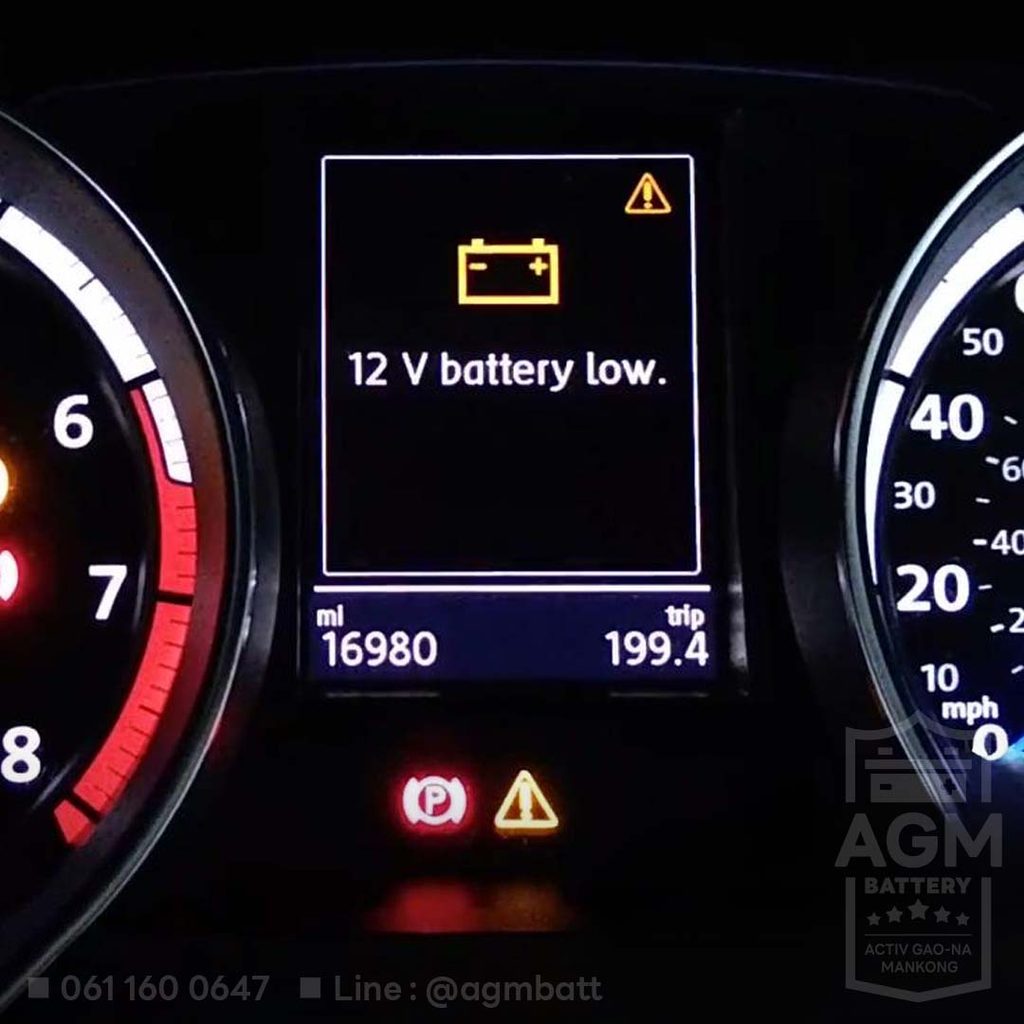
Will an EV warn you before the 12V battery dies?
There is no universal answer. Some EVs monitor low-voltage battery condition and display a dashboard message when voltage falls below a defined threshold. Other vehicles monitor only certain electrical conditions, or they may not warn the driver until the voltage is already too low for control modules to operate correctly.
A weakening battery may appear normal when the vehicle is active and the DC-DC converter is supporting the 12V system. After the car is parked, however, the battery may lose voltage under load. The next time the owner tries to unlock or start the vehicle, the car may not respond even though no warning appeared during the previous trip.
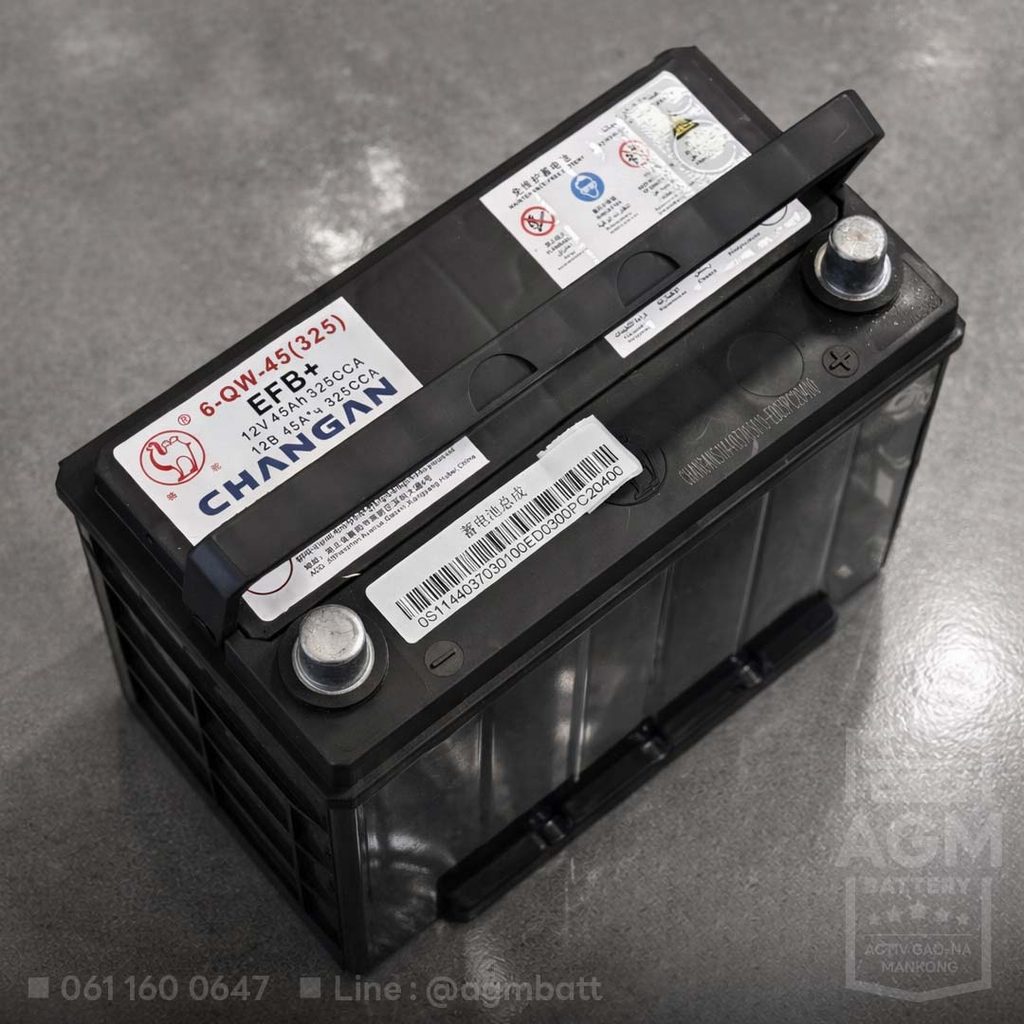
What does the 12V battery do in an electric car?
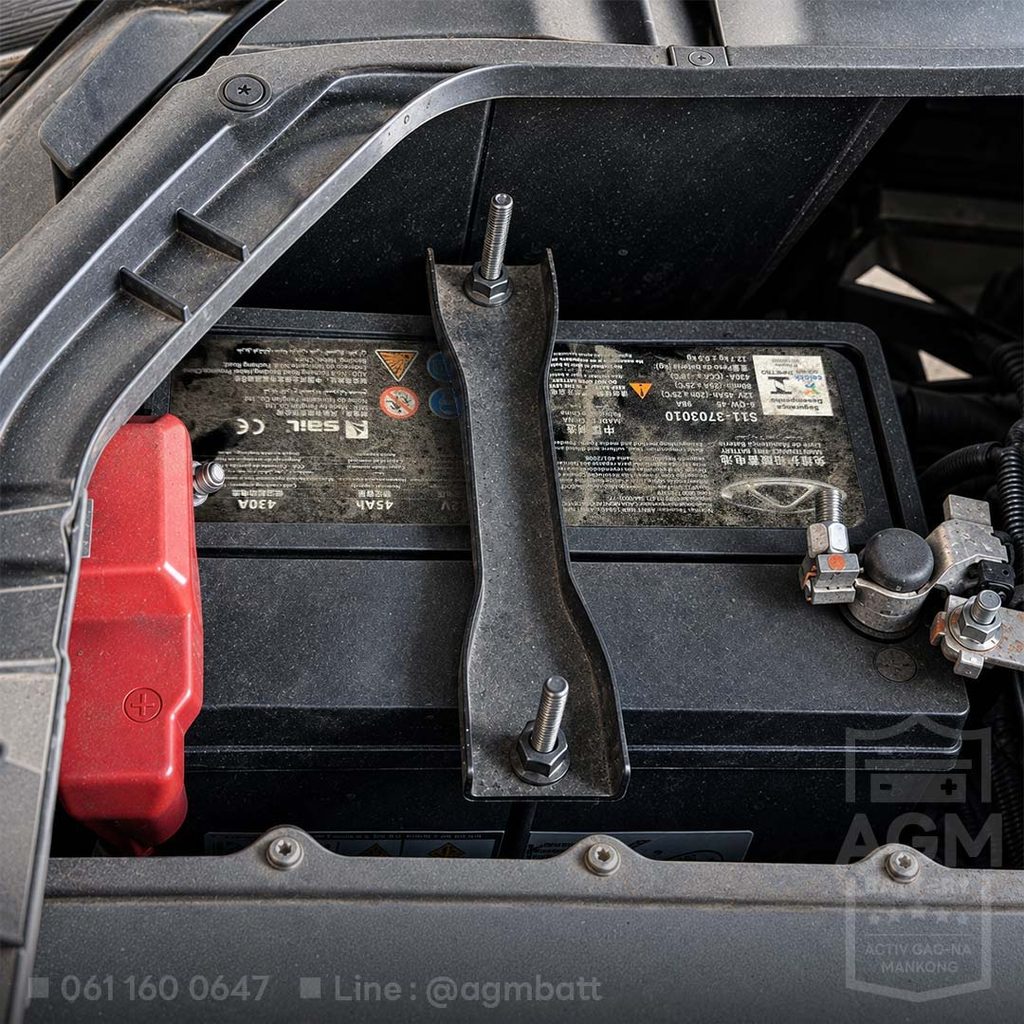
The large high-voltage battery supplies energy to the traction motor. The smaller low-voltage battery powers or wakes the systems that allow the vehicle to operate. Depending on the model, these can include:
- central locking and keyless-entry systems;
- vehicle computers, relays, sensors, and control modules;
- screens, lighting, alarms, and communication systems;
- safety and monitoring equipment; and
- the startup sequence that connects the high-voltage system and enables READY mode.
That is why an EV can show plenty of driving range yet still fail to power up. The traction battery may be charged, but the control system cannot complete its startup sequence without stable low-voltage power.
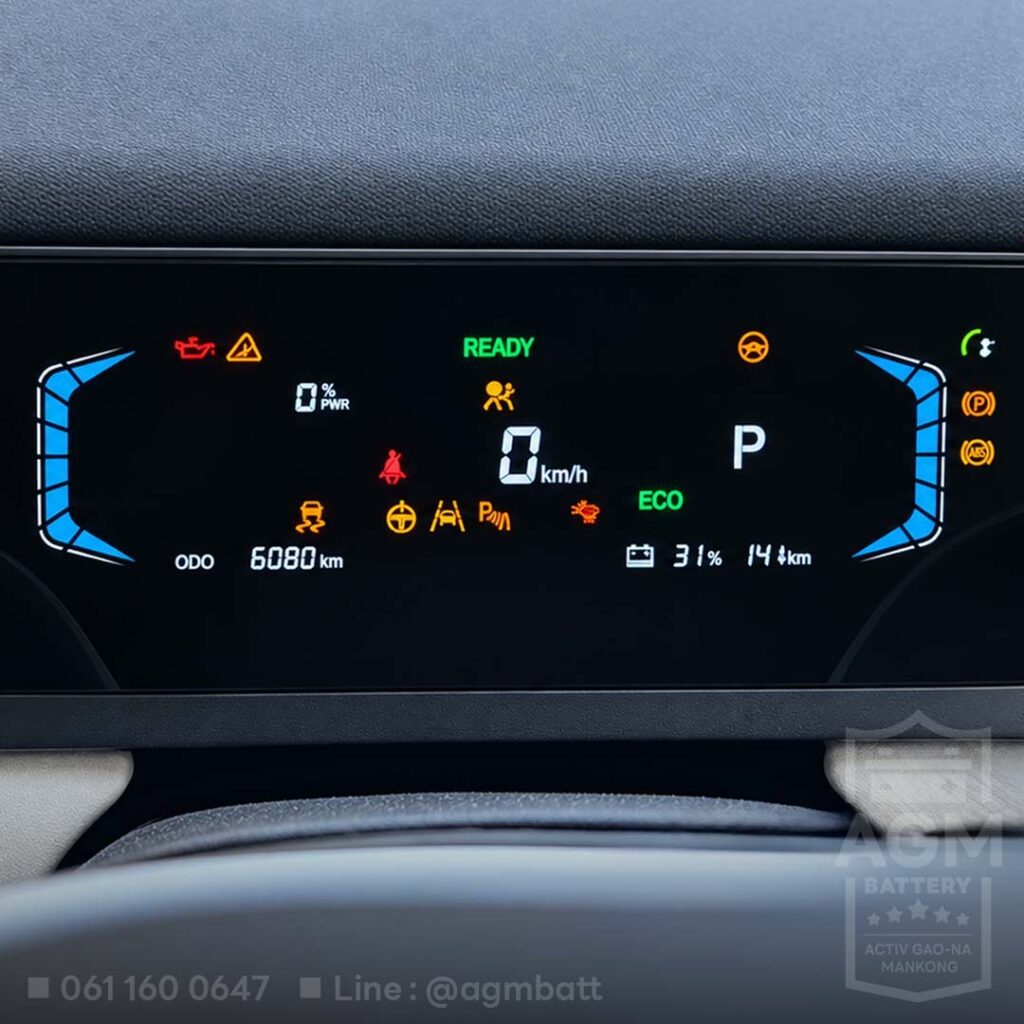
Common EV 12V battery warning signs
A weak 12V battery does not always produce the same symptoms. Treat the following as reasons to inspect the battery and low-voltage charging system, especially when they recur after the car has been parked:
| Symptom | What it may indicate | Recommended action |
|---|---|---|
| Doors unlock slowly or the remote works intermittently | Low or unstable 12V supply | Test battery condition and terminal connections |
| Multiple unrelated warning messages appear | Control modules may be receiving insufficient voltage | Check the 12V system before replacing electronic components |
| Screens reset, flicker, or remain blank | Voltage drop during system startup | Perform a battery and charging-system test |
| The car will not enter READY mode | The low-voltage system may not be able to activate the high-voltage contactors | Follow the owner’s manual and arrange professional assistance |
| The vehicle is unresponsive after being parked | Battery discharge, battery deterioration, or an abnormal electrical draw | Diagnose both the battery and the source of the discharge |
These symptoms are not proof that the battery itself has failed. Loose terminals, a charging-system fault, a software issue, or an abnormal parasitic load can create similar behavior. Proper testing prevents unnecessary replacement.
Why can an EV’s 12V battery fail without warning?
1. Warning strategies vary by manufacturer and model
Each vehicle uses its own sensors, software, thresholds, and message logic. A feature available on one model may not exist on another, and a warning may appear only under specific conditions.
2. A deteriorated battery can pass a simple voltage check
A battery can show an acceptable open-circuit voltage while having reduced capacity or poor current delivery. When several modules wake at once, its voltage may collapse. A load or conductance test provides a better assessment than a single voltage reading.
3. Charging behavior changes between vehicles
Most EVs use a DC-DC converter to support and charge the low-voltage system from the traction battery, but the timing and conditions vary. Charging may depend on vehicle state, software, traction-battery charge level, or manufacturer settings.
4. Parking and accessory use can expose a weak battery
Long parking periods, frequent short use, connected accessories, dash cameras, communication modules, extreme heat, and an abnormal electrical draw can increase the chance of low-voltage discharge. These factors do not affect every vehicle equally.
What should you do if the 12V battery is dead?
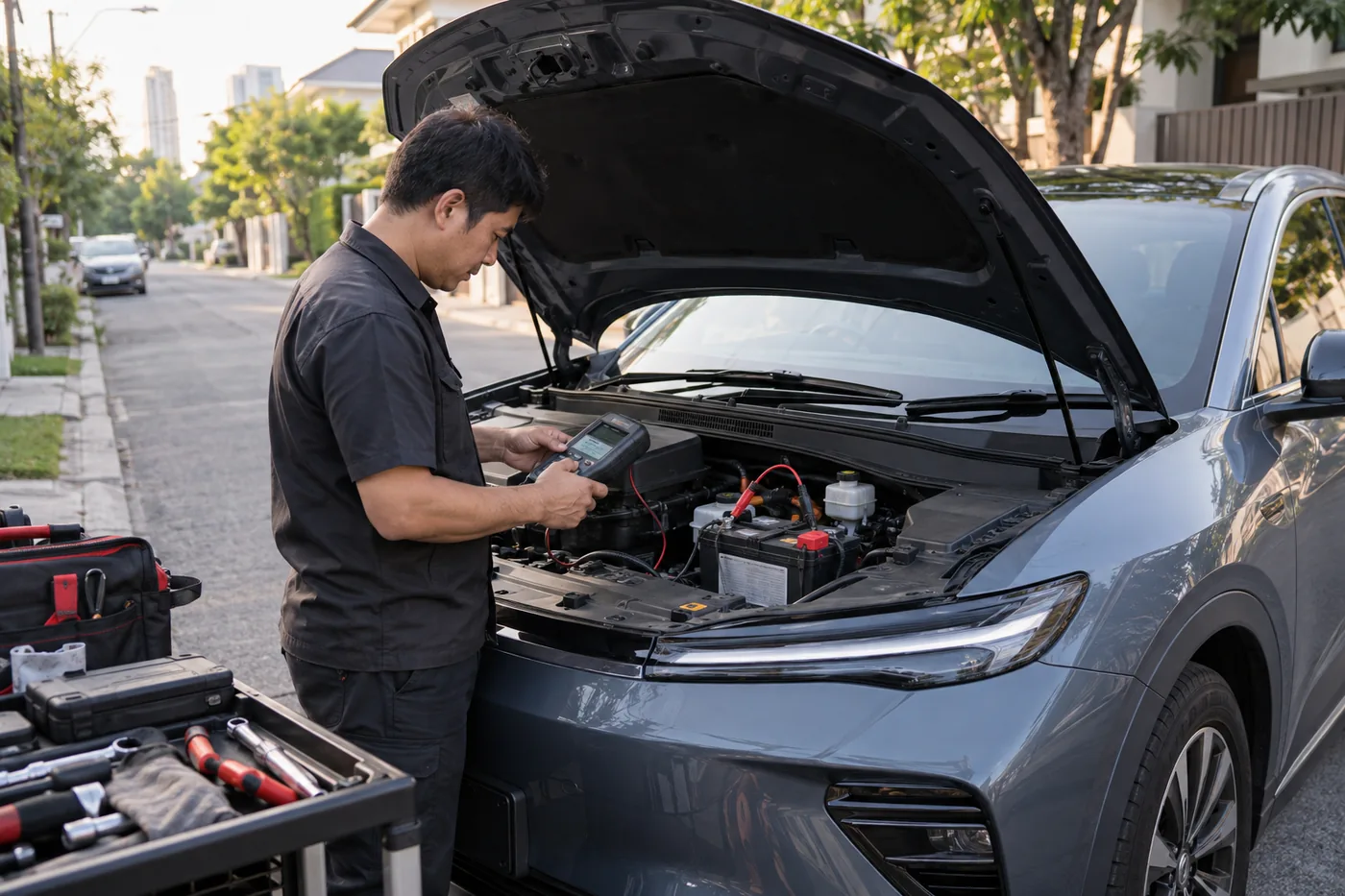
- Confirm the symptoms. Check whether the car unlocks, whether displays illuminate, and whether any low-voltage message appears.
- Read the owner’s manual. Locate the approved low-voltage connection points and the model-specific recovery procedure.
- Inspect safely. Look for loose connections or visible damage only if the battery and terminals are safely accessible.
- Jump-start only as instructed. Do not guess the connection points. Incorrect polarity or an unsuitable procedure can damage electronics or create a safety risk.
- Test the complete system. After recovery, test battery health, DC-DC charging performance, fault codes, and possible abnormal current draw.
- Replace with the correct specification. Match the battery technology, size, terminal layout, capacity, and other requirements stated by the manufacturer.
- Complete any required reset or registration. Some vehicles require a battery reset, initialization, or coding procedure after replacement.
Safety note: the high-voltage traction system must be treated separately from the 12V system. Do not touch orange high-voltage cables or components. If the correct procedure is unclear, contact the vehicle manufacturer, roadside assistance, or a qualified EV technician.
How to reduce the risk of sudden 12V battery failure
- Have the low-voltage battery tested during routine service and before a long trip.
- Arrange a check before leaving the vehicle parked for an extended period.
- Investigate repeated electronic faults instead of clearing and ignoring them.
- Use accessories and parking-mode devices according to their power-management instructions.
- Keep vehicle software and service campaigns up to date where applicable.
- Follow the storage and charging recommendations in the owner’s manual.
There is no single replacement age that applies to every EV. Battery chemistry, climate, parking conditions, electrical load, and vehicle strategy all affect service life. Test results and recurring symptoms are more useful than age alone.
Choosing the correct replacement battery
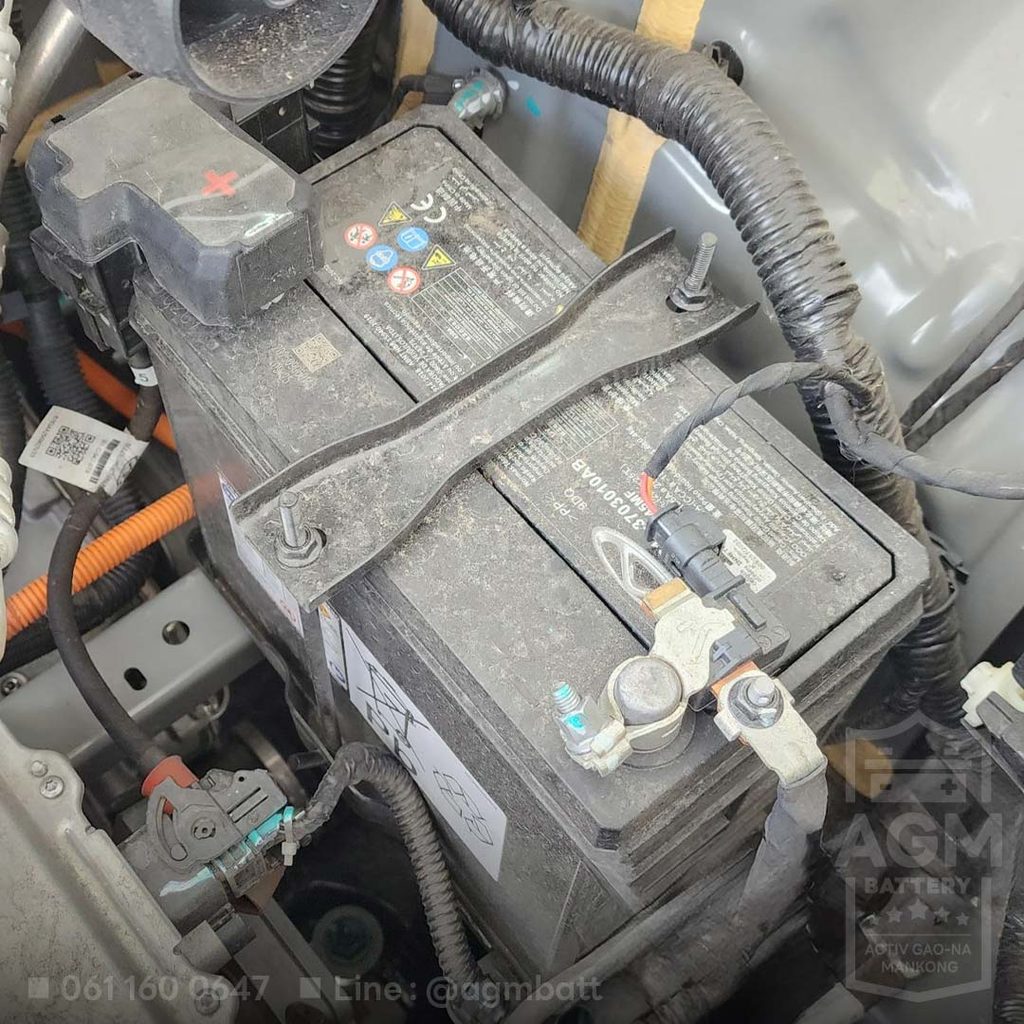
EVs do not all use the same low-voltage battery. Depending on the vehicle, the original unit may be AGM, EFB, a conventional lead-acid design, or another manufacturer-specified technology. Never select a replacement by physical size or amp-hour rating alone.
Check the original battery label, the owner’s manual, and manufacturer data. If the vehicle was factory-equipped with an AGM battery, replace it with a compatible AGM unit of the correct specification unless the manufacturer provides an approved alternative.
Frequently asked questions
Can an EV’s main battery be full while the 12V battery is dead?
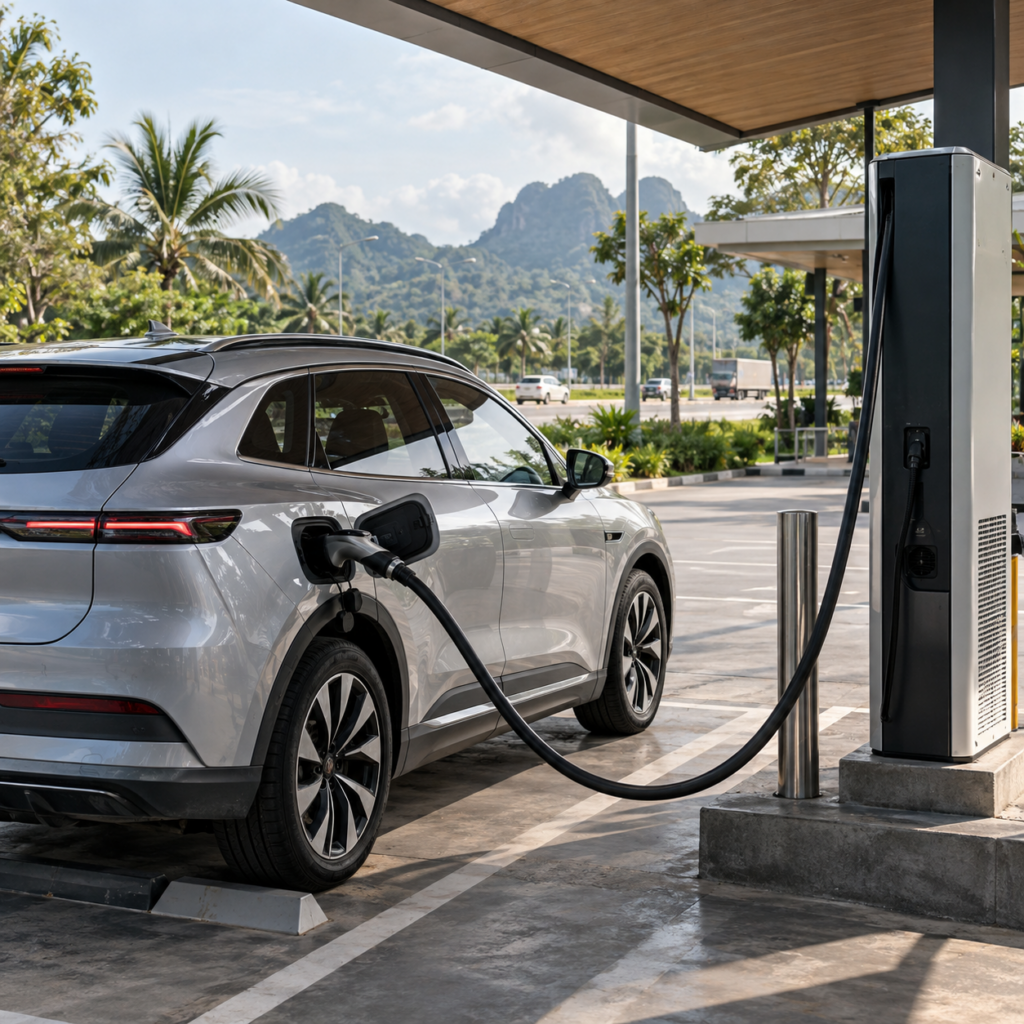
Yes. The two batteries perform different functions. A charged traction battery cannot guarantee that the low-voltage control system has enough power to unlock the car or initiate READY mode.
Will every EV display a low 12V battery warning?
No. Warning capability and activation thresholds vary by manufacturer, model, and software. Some failures can occur without a clear message.
Can you drive an EV with a dead 12V battery?
If the low-voltage system cannot start the vehicle’s control modules, the car usually cannot enter READY mode and cannot be driven normally.
Can an electric car be jump-started?
Many models provide a low-voltage recovery procedure, but the connection points and steps differ. Follow the owner’s manual exactly. Never apply a generic procedure without checking the manufacturer’s instructions.
When should an EV 12V battery be replaced?
Replace it when testing confirms poor health or when recurring symptoms are traced to the battery. There is no fixed lifespan for every model, so consider battery condition, vehicle requirements, and diagnostic results together.
Final advice
An EV’s 12V battery can weaken or fail without an obvious warning. If the car unlocks slowly, displays electrical faults, resets systems, or refuses to enter READY mode while the traction battery is charged, inspect the low-voltage system early. For more ways to protect the vehicle’s main battery, read our EV battery care guide.
Need an EV 12V battery check or replacement in Bangkok and surrounding areas? AGM Battery Shop can help confirm the correct battery specification and provide on-site service by appointment. Call 061 160 0647 or contact LINE @agmbatt.